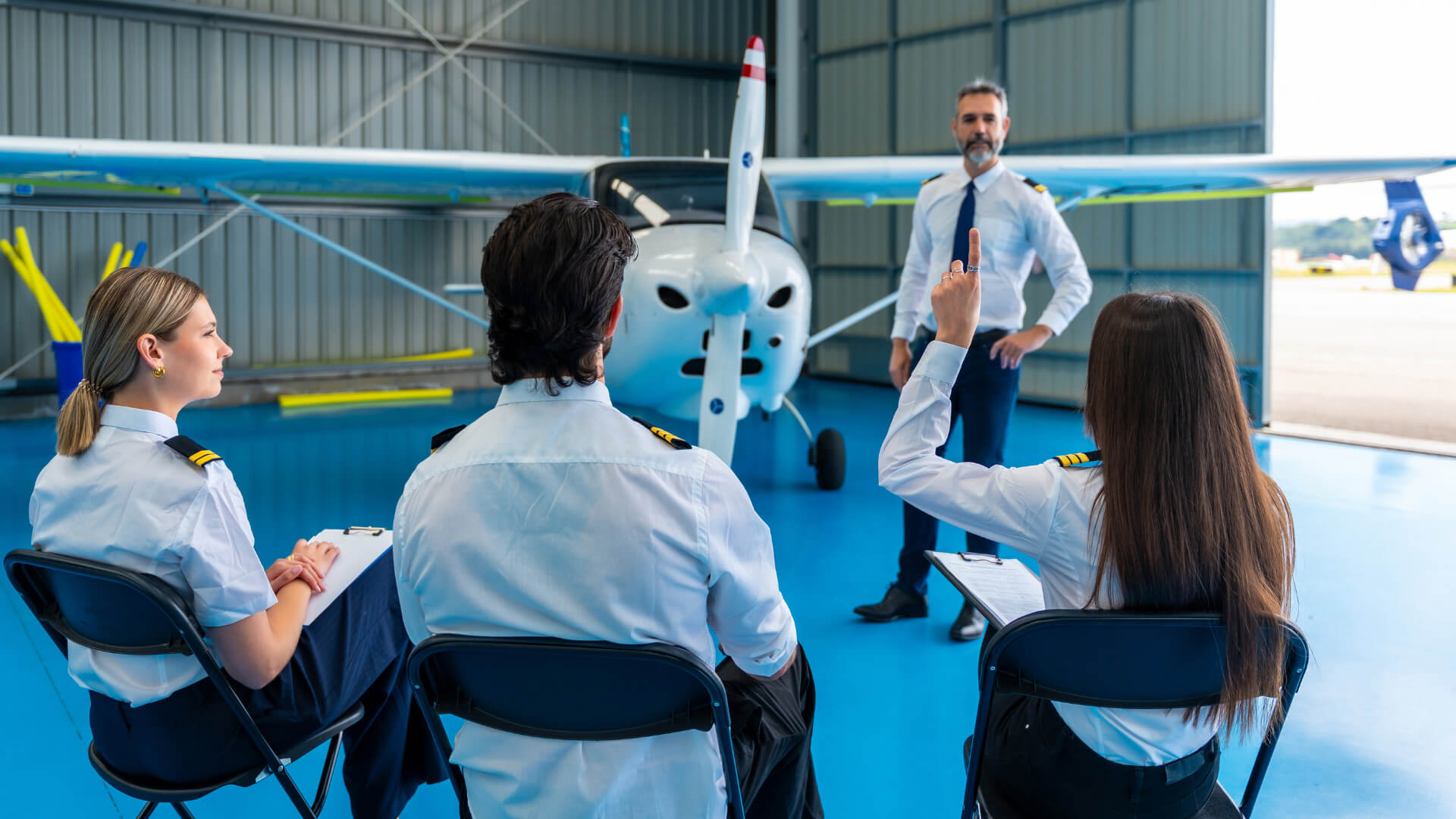
When a training flight ends in a mishap, the first explanation may point to student error, instructor error, or something that happened in the cockpit. But the full picture often takes time to understand.
Justin Drach, who leads our aviation practice, has been involved in aviation safety long before he practiced law. One lesson from that work carries directly into these cases: training mishaps are rarely caused by a single decision or a single person.
A training flight can involve the student, the instructor, the flight school, the aircraft owner or operator, and the maintenance provider. Depending on the evidence, more than one party may share responsibility.
Finding out what happened means looking closely at the records, decisions, and conditions surrounding the mishap.
Why more than one party may be responsible
After a training mishap, attention often turns first to the student pilot. But that is only one part of what investigators may need to examine.
What did the instructor see or know during the flight? Were the school’s procedures followed? Was the aircraft safe to fly? Did its maintenance history show any earlier problems?
Those questions matter because responsibility may extend beyond the person at the controls. Aviation mishaps generally come from a chain of events rather than one failure, which holds across the common causes of aviation mishaps.
The NTSB investigates the mishap and determines probable cause, but it does not decide who is legally responsible in a civil claim. That requires a separate look at the evidence and the role each person or company may have played, and it is one of several things most people don’t know about aviation injury claims.
Florida is a center of flight training
Florida is among the states with the highest concentration of FAA-certificated flight schools, with significant clusters around Jacksonville, Daytona Beach, Orlando, Miami, and South Florida. Year-round flying weather and extensive general aviation infrastructure have made the state a destination for people learning to fly, including many who come here from abroad to do it.
That concentration means training flights, and questions about them, come up here often. It does not mean accidents are more likely in Florida, and we would not suggest otherwise. More activity is not the same as more risk.
The parties an investigation may examine
Whether any of these parties bears legal responsibility depends entirely on the facts. What follows is what could make each one relevant to the investigation.
The flight school or training organization
Schools set the procedures a flight operates under: dispatch and weather minimums, aircraft assignment, instructor qualification and oversight, and how training progresses. Questions may involve whether procedures existed, whether they were followed, and whether the organization’s own records show anything inconsistent with how the flight was conducted.
The flight instructor
An instructor’s role is supervision and decision-making. Relevant questions may include what was briefed before the flight, what the instructor’s own records show about their experience and currency, how the decision to fly was made given the conditions, and at what point the instructor intervened or did not.
The aircraft owner or operator
This is the one that surprises families most, and it is where training cases get complicated. The school, the owner, and the operator are frequently not the same entity. Aircraft are leased, leased back, or held by a separate company set up for that purpose. Ownership and operational control determine who was responsible for the aircraft’s condition and who had authority over how it was used, and those answers are not always where you would expect to find them.
Maintenance and repair providers
Inspection and maintenance records show what was done, when, and by whom. Where a mechanical issue is suspected, the questions involve what the last inspection covered, whether a discrepancy was reported and how it was addressed, and whether the work met applicable standards.
Manufacturers and component manufacturers
If a component failed, whether it failed because of design, manufacture, or something else becomes its own question. Technical testing usually answers it, and manufacturers are sometimes participants in the federal investigation itself.
Other parties
Depending on the facts, this could include another aircraft’s operator, an air traffic services provider, a fueling service, or others whose conduct may have contributed.
What the records can show
Aviation cases are built substantially on documentation, and a training flight generates more of it than most.
Among what may be relevant: aircraft maintenance and inspection records, flight and training logs, instructor and student records, aircraft ownership and leasing documentation, the school’s operational records, weather data, communications, witness accounts, and NTSB or FAA materials where applicable.
Families can and sometimes do obtain records on their own. The difficulty is usually somewhere else. Knowing which records exist, which sources hold them, how they relate to each other, and what a given entry actually indicates is the part that takes experience with aviation matters. A maintenance write-up that reads as routine can matter enormously once it sits next to a specific finding about a specific component.
That is the background Justin brings to this work. He flew in the Navy, graduated from the Naval School of Aviation Safety, and is certified as an Aviation Safety Officer, which means maintenance records and investigative files are documents he has worked with long before they became evidence in a case. It shapes how these accidents get reviewed from the first conversation. You can read more about our aviation practice and how we approach these cases.
Why the timing of evidence matters
Records sit with the parties who created them. Aircraft are examined, released, and sometimes returned to service. A specific preflight briefing on a specific morning is remembered clearly for a while, and then less clearly.
None of that means evidence vanishes in every case. It means identifying what should be preserved and asking for it early, which tends to produce a clearer picture than waiting. That is one of the few things genuinely within a family’s control in the weeks after an accident.
In fatal mishaps, families may also be weighing questions involving aviation wrongful death claims, which run on their own legal timeline.
Potentially involved is not the same as legally responsible
Everything above describes what an investigation may examine. None of it suggests that a flight school, instructor, owner, or manufacturer did anything wrong in any particular mishap.
We want to be plain about that, because we have real respect for the people who do this work. Most training flights are conducted carefully by instructors and schools who take the responsibility seriously. When something does go wrong, an investigation aims to establish what actually happened, which means following the evidence rather than deciding in advance where it leads.
Schedule a confidential consultation
When it isn’t clear who was responsible for what, a review of the available evidence can help identify which parties’ conduct may be relevant and which records should be examined.
If you or someone in your family has been involved in a flight-training accident, schedule a confidential consultation to discuss the circumstances and the evidence that may need to be reviewed, or call 904-600-4384.
This article is provided for general informational purposes only. It is legal information, not legal advice for any specific case. Reading it does not create an attorney-client relationship. Every case is different, and past results do not guarantee a similar outcome in any future matter.