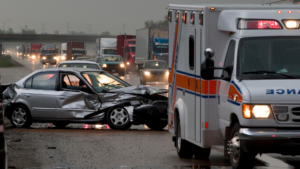
A car accident is stressful enough, but learning that the driver who caused it has no bodily injury insurance or not enough coverage to pay for your losses can make the situation even more difficult.
This is a serious concern in Florida, where Insurance Research Council estimates show that about one in five Florida motorists was uninsured in 2023. Florida also had one of the country’s highest estimated rates of underinsured drivers.
If you were injured by an uninsured or underinsured driver in Jacksonville or elsewhere in Florida, comprehending your coverage can help you determine which options may be available to you.
Why Insurance Gaps Are Common in Florida
In Florida, most drivers must carry the following minimum insurance coverage:
- $10,000 in Personal Injury Protection (PIP)
- $10,000 in Property Damage Liability (PDL)
PIP helps cover certain medical expenses and lost income, regardless of who caused the crash. PDL covers damage the insured driver causes to someone else’s property.
However, most private vehicle owners are not required to carry bodily injury liability coverage simply to register a car. Because that is the coverage used to pay for injuries a driver causes, someone can meet Florida’s basic registration requirements without having insurance available for another person’s injuries.
Florida’s no-fault system and current PIP requirements remain in effect as of June 2026.
Uninsured vs. Underinsured Drivers
Although these terms are often used together, they describe different situations:
Uninsured motorist: The responsible driver has no bodily injury liability coverage available. An unidentified hit-and-run driver may also be treated as an uninsured motorist.
Underinsured motorist: The responsible driver has bodily injury coverage, but the policy limits are insufficient to cover the full value of the injured person’s losses.
You may still have a claim against the driver or another responsible party. However, obtaining compensation can be difficult when there is limited insurance coverage, and the responsible person has limited assets.
How PIP and UM Coverage Can Help
After a car accident in Florida, your PIP coverage usually pays first, no matter who caused the crash.
PIP generally covers:
- 80% of eligible medical expenses
- 60% of eligible lost wages
You generally must receive qualifying initial medical care within 14 days of the crash. PIP may provide up to $10,000 in combined medical and disability benefits, but medical benefits may be limited to $2,500 without a qualifying emergency medical condition.
PIP can be exhausted quickly after a serious accident and generally does not cover pain and suffering. That is where uninsured motorist coverage may become important.
UM coverage is part of your own auto insurance policy. Depending on your policy, injuries, available limits, and the facts of the crash, it may help cover:
- Medical expenses not covered by PIP
- Additional lost income
- Future medical care
- Reduced earning capacity
- Pain and suffering when Florida’s legal injury threshold is met
UM coverage does not provide duplicate payment for losses already covered by PIP or another available source.
Do Florida Drivers Have to Carry UM Coverage?
Florida drivers are not required to carry uninsured motorist coverage. However, if your policy includes bodily injury liability, your insurer generally must provide matching UM protection unless you reject it in writing or choose lower limits.
Since you can decline UM coverage, check your policy documents and declarations page to see whether you have it and how much coverage you have.
Common Misconceptions
“If the other driver has no insurance, I have no case.”
Not necessarily. Your own UM coverage may apply. Depending on the circumstances of the crash, there may also be claims against the driver, vehicle owner, employer, or another responsible party.
“My own insurance company will automatically take care of me.”
A UM claim is still an insurance claim. Your insurer may dispute fault, coverage, the cause of your injuries, the treatment you received, or the value of your damages.
“Hit-and-run accidents are not covered.”
That is not necessarily true. An unidentified driver may be treated as an uninsured motorist, and physical contact between the vehicles is not always required.
You must still prove that another vehicle caused the crash. Photos, witnesses, dash-camera footage, surveillance recordings, and a police report can be especially important.
“I do not need legal guidance because it is my own policy.”
Some claims are resolved without a major dispute. Others become complicated when serious injuries, policy exclusions, or multiple insurance policies are involved.
“I’m fully covered.”
You are not “fully covered” unless you have UM coverage. Some of the saddest cases are with people that are catastrophically injuredwith high BI policy limits, but declined UM coverage.
What to Do After a Crash With an Uninsured Driver
1. Call the police
Ask the police to come to the scene and make a crash report. This helps record who was involved, what happened, who saw it, and whether the other driver had insurance.
2. Call Thoele Drach
Call Thoele Drach at 904-600-4384. You need legal representation early. Remember, the at-fault driver, their insurance company, and probably your insurance company want to get out the crash with paying as close to $0 as possible.
3. Seek medical care promptly
Some injuries may not be obvious right away. In Florida, you generally need to receive initial medical treatment within 14 days of the accident to qualify for PIP medical benefits.
4. Report the accident to your insurance company
Report the accident to your insurance company as soon as possible and follow your policy terms. Before you accept a settlement, sign anything, or give a recorded statement, consider talking to a lawyer.
5. Review your insurance policy
Check whether you have UM coverage, how much coverage is available, who the policy protects, and whether it is stacked or non-stacked.
6. Save important evidence
Save anything that helps show what happened:
- Photos or videos of the crash
- The police report and witness contact details
- Medical records, bills, proof of lost income, and receipts for accident-related expenses
7. Be careful with early offers
An early settlement may come before you know the full extent of your injuries. Once you sign a release, you may not be able to pursue additional compensation.
8. Do not assume every claim has the same deadline
A negligence claim against the responsible driver may have a different deadline from a claim involving your UM policy. Insurance policies can also contain notice and consent requirements, so it is important to act promptly.
You Do Not Have to Manage This Alone
The other driver’s lack of insurance does not always mean there is no path to compensation. Your PIP benefits, UM coverage, other insurance policies, or claims against additional responsible parties may need to be considered.
At Thoele Drach, we help accident victims across Northeast Florida make sense of their insurance coverage and understand what options may be available. Our team can review what happened, look closely at the policies involved, and help identify possible sources of compensation.
Schedule a confidential case evaluation to discuss your rights and options.
Call (904) 600-4384 or request your case evaluation online.
This article is intended for general informational purposes and should not be considered legal advice. Every accident and insurance policy is different, so your rights and coverage will depend on the specific facts of your case and the law that applies. Reading this article does not create an attorney-client relationship.