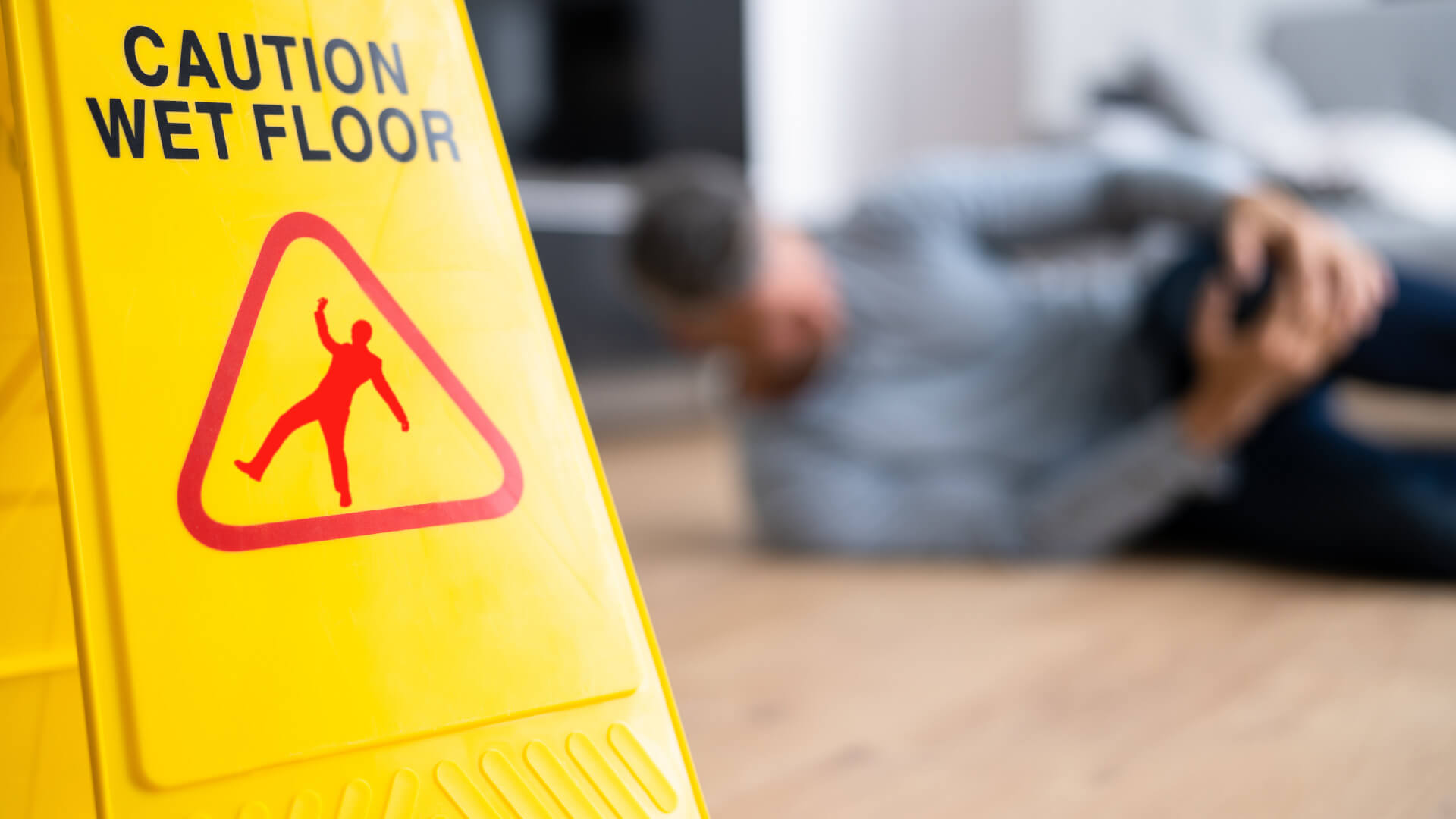
When a slip-and-fall accident happens, figuring out who may be liable usually depends on more than where the fall took place. It could happen in a grocery store aisle, on an apartment walkway, or in a parking lot, but what matters more is what caused the fall, who was responsible for maintaining that area, and whether the dangerous condition was known or should have been addressed.
Because every accident happens under different circumstances, liability is not always straightforward. Below, we explain who may be held responsible for a slip-and-fall accident in Florida and the factors that can affect a claim.
When Does a Slip-and-Fall Become a Premises Liability Claim?
A slip-and-fall becomes a premises liability issue when the property’s condition may have contributed to the accident. That could be a wet floor, uneven pavement, a broken stair, poor lighting, a damaged railing, or another condition that made the area unsafe.
But the fact that a hazard existed does not automatically mean someone is legally responsible. The key is whether the person or business responsible for the property failed to take reasonable care under the circumstances and whether that failure caused the injury.
In other words, the focus is not only on what caused the fall, but also on who was responsible for the area and what they knew, or should have known, about the dangerous condition.
Who Can Be Held Responsible for a Slip-and-Fall?
After a slip-and-fall, it may seem natural to look first at the property owner, but ownership does not always tell the whole story. In many places, different people or companies are responsible for different parts of the property.
A shopping center is a good example. One company may own the building, individual stores may control their own spaces, a property manager may oversee the common areas, and another company may handle cleaning or parking lot maintenance. If someone falls, the key question is who was responsible for the area where it happened and who could fix the problem or warn people about it.
Depending on the circumstances, that could be the property owner, a tenant, a business operating there, a property manager, or a maintenance or cleaning company. When responsibilities are divided, documents such as leases, management agreements, and maintenance contracts can help show who was supposed to handle that part of the property.
What Did the Responsible Party Know or Should They Have Known?
After a slip-and-fall, it is not enough to know that a dangerous condition existed. The next question is whether the business or property owner knew about it, or whether the circumstances suggest they should have known before someone was hurt.
That may be clear if an employee saw the spill, a customer reported it, or staff had already started responding to the problem. In other cases, there may be no direct evidence that anyone knew, so the focus shifts to how long the hazard existed or whether the same problem happened often enough that it should have been discovered during normal inspection or maintenance.
Florida law deals with this specifically when someone slips on a temporary substance, such as a spill, in a business. Under Section 768.0755 of the Florida Statutes, the injured person generally has to show that the business knew or should have known about the condition and should have taken action to address it.
No fixed amount of time automatically determines whether a business is responsible. How long the condition may have been present, whether similar problems had happened before, and what the business did in response can all matter.
How Can You Determine What Happened Before the Fall?
Understanding the sequence of events before the accident can help explain whether there was an opportunity to discover and address the hazard.
Inspection records may show when an area was last checked. Prior complaints can reveal whether the same problem had come up before, while witnesses or employees may be able to explain what they saw leading up to the fall.
That context can change how the situation is viewed. A spill that appeared just before someone fell is different from one that had been there long enough for employees to notice and address it.
What Evidence Can Help Explain What Happened?
Photos, surveillance footage, incident reports, maintenance records, and earlier complaints can help show what the area looked like before the fall and who was responsible for taking care of it.
A spill can be cleaned up within minutes, a damaged area can be repaired, and surveillance footage may be overwritten, which is why documenting the scene early matters.
For more, read our article on evidence that may support a personal injury claim.
Can Your Own Actions Affect a Slip-and-Fall Claim?
Florida law allows responsibility for an accident to be divided among the people involved, so the injured person’s own actions may also be considered.
The court may look at whether the hazard was easy to see, whether anything blocked the person’s view, and what was happening around them at the time. Missing a dangerous condition does not automatically mean the injured person was at fault.
If the injured person shares some fault, their compensation may be reduced based on their percentage of responsibility. If they are found to be more than 50% responsible for their own harm, they generally cannot recover damages.
How Thoele Drach Can Help With a Slip-and-Fall Claim
Slip-and-fall claims often come down to details that are not obvious right away. At Thoele Drach, we review who was responsible for the area, what they may have known about the hazard before the fall, and what records or other evidence can help explain what happened.
We also look at how the injury has affected your treatment, work, and daily life, and we address any questions raised by the insurance company. That may include whether the hazard was visible, whether the responsible party knew or should have known about it, and what the available evidence shows about the claim.
When a claim cannot be resolved fairly, we can also prepare the case for litigation.
Talk to Thoele Drach About Your Slip-and-Fall Claim
If you were injured in a slip-and-fall, figuring out who may be responsible starts with a close look at what happened, including where you fell, what caused the accident, who was responsible for that area, and what evidence may still be available.
Through our personal injury practice, Thoele Drach can review those circumstances and help you understand your legal options.
Call 904-600-4384 to discuss your situation.
This article is provided for general informational purposes only and is not legal advice for any specific situation. Florida law and legal procedures may change, and their application depends on the facts and timing of each case. Reading this article does not create an attorney-client relationship. Past results do not guarantee future outcomes.