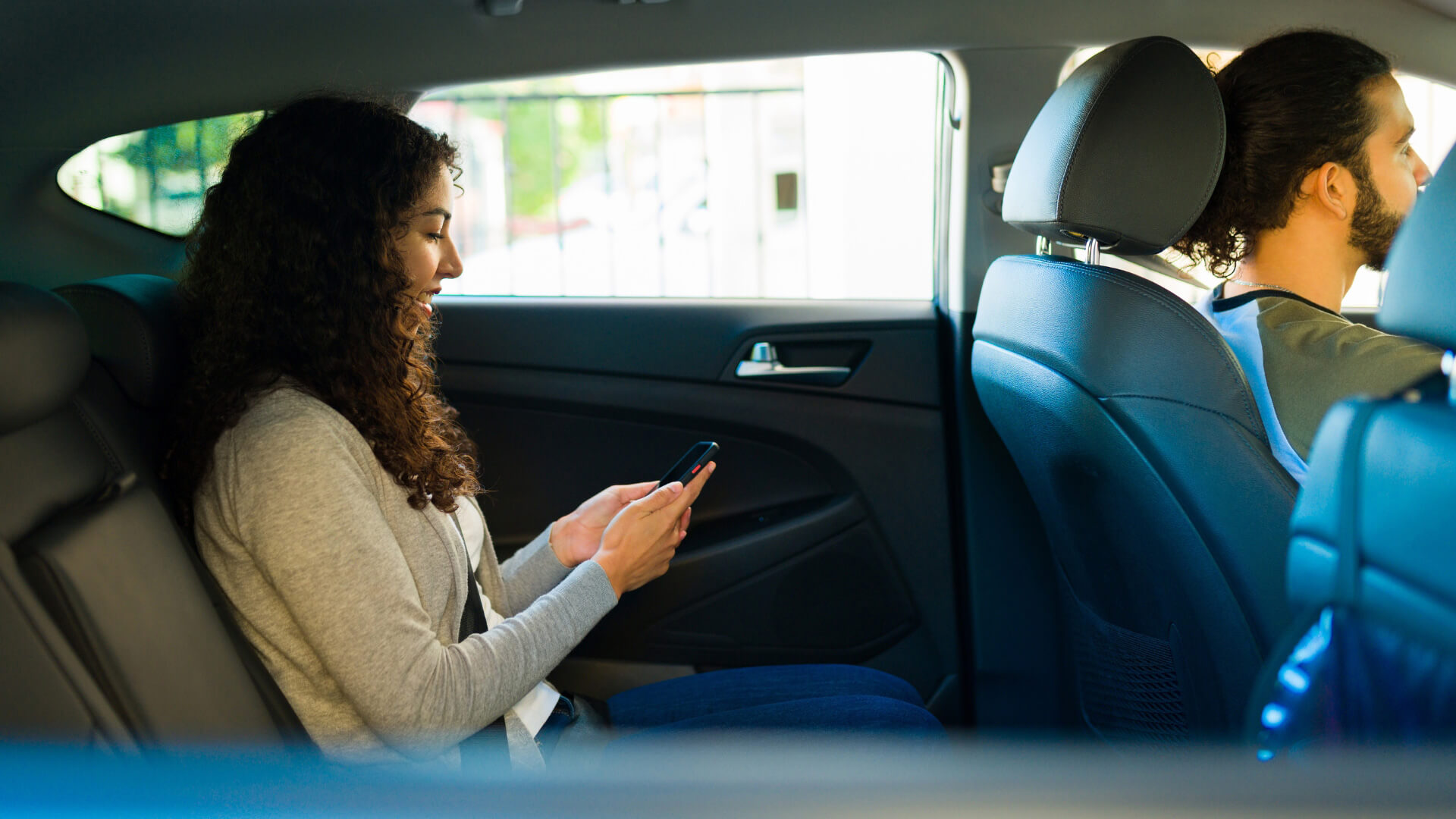
When your are injured in a rideshare crash, the insurance issues can get complicated quickly.
Unlike a typical crash involving two personal vehicles, coverage may depend not only on who caused the collision but on what the rideshare driver was doing at that exact moment.
A driver can move through several different stages during a single shift. They may be logged into the app and waiting for a request, on the way to pick up a passenger, or already transporting someone when the crash happens. From the outside, those situations look very similar. From an insurance standpoint, they may not be treated the same way.
That is why one of the first things we look at in a rideshare case is the driver’s status at the moment of the collision. That detail can help determine which policy applies, where a claim may need to be made, and what coverage may be available to the injured person.
Below, I’ll walk through how coverage shifts depending on the driver’s status, why these claims often stall between insurers, how Florida’s no-fault system fits underneath it all, and what to document at the scene so your claim holds up later.
Coverage shifts depending on the app
Rideshare companies don’t provide one continuous insurance policy. Coverage turns on and off and changes size depending on the driver’s status in the app at the time of the crash.
Florida addresses this in its transportation network company statute, section 627.748 of the Florida Statutes, which sets minimum coverage requirements based on the driver’s activity.
Offline, or app off:
If the driver wasn’t logged in, this is an ordinary crash involving an ordinary driver, and the driver’s personal auto policy applies.
Logged in, but no ride accepted.
The driver is available and waiting. Coverage exists here, but it is more limited than when a ride is underway. Personal auto policies commonly exclude commercial activity, so this is where people are most likely to discover a gap they didn’t know existed.
Ride accepted, or passenger aboard.
This is where rideshare insurance gets confusing, because a passenger does not have to be in the car for the driver’s insurance situation to change.
Under that statute, a prearranged ride begins when the driver accepts the ride request. So if the driver is already on the way to pick someone up, the crash may fall into a different coverage category than if the driver were simply logged in and waiting.
That is why we don’t only ask whether someone was riding in the vehicle. We also want to know whether the driver had already accepted a trip and what the app showed at the time of the crash. Those details help us understand which policy may apply and what coverage to review.
The key point is that the insurance picture can change before a passenger ever gets into the car.
Why more than one insurance policy may come into play
This is what most often confuses our clients. They may know who caused the crash, but still have no idea which insurance company is responsible.
Depending on what happened, there may be several policies to review: the driver’s personal auto insurance, coverage connected to the rideshare trip, your own insurer, or another driver’s carrier.
The difficulty is figuring out which one actually applies. That can turn on the driver’s app status, the circumstances of the crash, and the terms of each policy.
While that gets sorted out, medical bills, vehicle repairs, and missed work keep arriving on their own schedule. That pressure is real, and it’s worth naming because it often arrives just as an early offer starts to look like relief. Understanding what coverage is actually available matters before you decide anything about a claim.
Florida’s no-fault system sits underneath all of this
One thing that gets lost in the general coverage of this topic is that Florida is a no-fault state.
Florida’s Personal Injury Protection system generally requires that you receive initial medical treatment within 14 days of a motor vehicle accident to qualify for full PIP medical benefits. That deadline runs on its own clock, entirely separate from any dispute between insurers over which policy applies.
I’ve talked with people who waited to see a doctor because they didn’t know who would pay, or because they assumed the sorting out had to happen first. It doesn’t. The insurance question and your medical treatment are on different timelines, and waiting on the first can cost you access to benefits you’re entitled to.
If you want a fuller picture of how these timelines work, we covered them in our article on how long personal injury cases take in Florida.
What to document at the scene
Most of what determines these claims is established in the first hour, often by people who have no idea they’re establishing anything.
If you’re able to, and if it’s safe:
- Screenshot the app. If you were the passenger, your trip screen would show the driver, vehicle, trip status, and time. This is the single most valuable piece of evidence in a rideshare claim, and it can become harder to retrieve later.
- Photograph everything. The vehicles involved, any rideshare decal or placard, where the cars came to rest, the damage, and the surrounding scene.
- Get the driver’s name, personal insurance information, and license plate. Personal insurance, not just the fact that they drive for a platform.
- Ask whether the driver was logged in, whether they had accepted a ride, and whether anyone was in the car. Ask at the scene, before anyone has a reason to characterize it differently. Whether a ride had been accepted matters as much as whether a passenger was present.
- Get witness names and phone numbers. Not just whether police spoke to them.
- Report the crash through the app, in addition to calling law enforcement.
- Seek medical evaluation promptly, even if you feel fine. See the 14-day note above.
A note on what to say afterward
You’ll likely hear from an insurance adjuster quickly, possibly more than one.
Be cautious about giving a recorded statement before speaking with an attorney. In an ordinary claim, that’s general advice. In a rideshare claim, it carries more weight because you may be asked about the driver’s app status when you don’t actually know the answer. An honest guess, recorded, can later be treated as a fact.
What happens next
Some rideshare claims are relatively straightforward. The driver’s status is clear, fault isn’t seriously disputed, and the applicable coverage can be identified without much disagreement.
Others aren’t. Questions about app status or which policy applies can lead to delays and disputes that are difficult to resolve on your own.
At Thoele Drach, we look beyond how the crash happened. We work to identify the applicable coverage and understand how the driver’s rideshare activity affects the claim, so the decision in front of you is informed rather than pressured.
If you were injured in a rideshare accident and aren’t sure where your claim stands, schedule a confidential case evaluation or call 904-600-4384.
This article is provided for general informational purposes only. It is legal information, not legal advice for any specific case. Reading it does not create an attorney-client relationship. Every case is different, and past results do not guarantee a similar outcome in any future matter.